Review:Baker Street and Beyond and The Baker Street Briefs/Christopher Roden
This review of the books "Baker Street and Beyond", by Lord Donegall & "The Baker Street Briefs", by S. Tupper Bigelow was written by Christopher Roden and published in the The Parish Magazine (No. 10, march 1994).
This review compares two collections of Sherlockian essays, judging Donegall's volume more attractive in presentation but uneven and error-prone in scholarship. Bigelow's book is less polished physically, yet praised for its wit, stronger reasoning, and greater intellectual value; both books are found absorbing.
Review


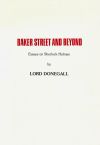
- BAKER STREET AND BEYOND: Essays on Sherlock Holmes
- by Lord Donegall
- Westminster Libraries & The Sherlock Holmes Society of London, 1993; 126pp + 12 plates; £14.95; ISBN 0-900902-17-0
- (Prices inc. postage: UK £16.50; Europe £17.50; N.America US$35; Far East/Australia £19.50)
- Order from: Sherlock Holmes Collection, Marylebone Library, Marylebone Road, London NW1 5PS

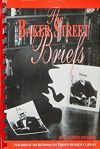
- THE BAKER STREET BRIEFS
- by S. Tupper Bigelow
- Edited by George A. Vanderburgh & Cameron Hollyer
- Metropolitan Toronto Reference Library, 1993; 168pp; C$17.95; ISBN 0-88773-040-X
- Order from: George A. Vanderburgh, P.O.Box 204, 420 Owen Sound Street, Shelburne, Ontario, Canada LON 1S0

Reviewed by Christopher Roden
It is pleasing to note that the efforts of a few dedicated Sherlockians and the foresight of the two libraries holding major collections of Conan Doyle's work are making available, in collected form, articles by two Sherlockians, which have been difficult to acquire in recent years.
Baker Street and Beyond scores highly in presentation. The book is well produced, in glossy card covers, and has a dozen colour plates from the famous Donegall Christmas cards, some of which used coloured versions of Dr Julian Wolff's maps of the Sherlockian world. The Donegall articles come chiefly from The New Strand, which commenced publication in December 1961 and ran for fifteen issues until February 1963. Those articles not published in The New Strand appeared in The Sherlock Holmes Journal, which Donegall edited from 1956 until his death in 1975.
The tone of the articles is that of one imbued with the traditions of the Sherlockian 'game', and one wonders how non-Sherlockian readers of The New Strand reacted to the arguments over Watson's wound and Watson's wives. Each month readers were treated to a discussion of cases which, by the law of Sherlockian Chronology, took place in the particular month of the magazine's issue. Thus, it seems only natural to find a discussion of 'The Blue Carbuncle' taken from the January 1962 issue. As Donegall notes, 'it [the story] belongs to that "warm little hollow between Christmas and the New Year" — a sort of peaceful No-Man's Land between the busy-ness of forcing everybody to be merry and the start of yet another Problem-year.'
The articles re-tell the events of the various Holmes adventures, and are interspersed with Donegall's wry comment and opinions from other Sherlockians. They vary in quality the later ones, as Tony Howlett admits in his Introduction, are not of the standard of the earlier ones. Donegall even spends a page of one article correcting earlier errors but, even so, errors remain, presumably inherited from the originals. Not having seen the originals, however, I can only comment that Lady Eva Blackwell is added to the cast of 'Charles Augustus Milverton', that the Worthington Bank is reported as having been robbed in 'The Resident Patient', and that Sidney Paget, who died in 1908, is credited with the illustration for 'The Dying Detective' (1913). Such errors are dismissed lightly in the Introduction by the remark that Donegall was a careless writer. They do, however, seemingly reflect on the standards of his scholarship.
In contrast to the reportage of Donegall, S. Tupper Bigelow's articles offer well-reasoned views on various Sherlockian debating points. There is a wicked humour at play here, and even help for the budding writer of Sherlockian articles: in 'A Fertile Field', Bigelow offers suggestions for topics which even now, some twenty-six years on, are still neglected.
The Baker Street Briefs is by no means as attractive a production as Baker Street and Beyond. The typesetting is very obviously not the work of a professional studio and the spiral binding gives the book a certain air of unimportance. Unimportant it certainly is not. Bigelow brings into play his background as a Judge in many of the articles. In 'Sherlock Holmes was No Burglar' and 'Silver Blaze: The Master Vindicated', for example, he uses knowledge of The Larceny Act, 1916 and The Jockey Club Rules to convincingly vindicate Holmes from the misdemeanours of which others have accused him.
Bigelow's style of writing has greater appeal than Donegall's, which at times gives the impression of a lecture. And Bigelow has more to offer from the theoretical viewpoint: there is little simple re-telling of events in these articles.
Overall then, honours are even. As this review is being written during the season of the Winter Olympics, readers will excuse my ending by saying that the Donegall volume scores highly for artistic impression, but Bigelow's articles even the score with their technical merit. Both volumes are an absorbing read.
C.R.
- Article courtesy Christopher Roden, founder of The Arthur Conan Doyle Society (1989-2003).

