Review:Conan Doyle - A Biographical Solution/David Stuart Davies
This review of the books "Conan Doyle - A Biographical Solution" and "Sherlock Holmes Investigates the Murder in Euston Square", by Ronald Pearsall was written by David Stuart Davies and published in the The Parish Magazine (No. 2, december 1989).
This review is sharply critical of Ronald Pearsall's Conan Doyle biography, arguing that it is unsympathetic, poorly judged, and unsuccessful both as biography and as literary assessment. It also dismisses Pearsall's The Murder in Euston Square as a weak Holmesian curiosity, faulting its chronology, characterization, and general interest.
Review


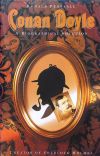
- Conan Doyle — A Biographical Solution
- by Ronald Pearsall; Richard Drew Publishing (1989); 208pp; £5.99

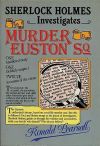
- Sherlock Holmes investigates The Murder in Euston Square
- by Ronald Pearsall; David & Charles (1989); 186pp; £9.95

Reviewed by David Stuart Davies
Possibly the first contact which the Sherlockian and Doylean world had with Mr. Pearsall was in the Summer of 1976 when the following letter appeared in the Silver Jubilee Issue of The Sherlock Holmes Journal:
- "Sirs: I have been commissioned to write a biography of Conan Doyle, and it occurs to me that one or two readers of your Journal might well have met him, though he did die in 1930. I realise, of course, that an interest in Sherlock Holmes does not necessarily mean an interest in Conan Doyle. RONALD PEARSALL"
One wonders just how successful Pearsall was in establishing contact with anyone who knew Conan Doyle, for some of his analysis of the man bears little resemblance to accounts of others who knew him. Perhaps there was some motive behind his adoption of the unfortunate phrase first used by Hesketh Pearson, as he chooses to describe A.C.D.'s tastes as being those of the typical Victorian 'man in the street'.
Pearsall is unsympathetic in the extreme: he dismisses Conan Doyle's medical practise as a failure and considers him to be devoid of culture when it comes to music, art and generally anything requiring sensibility. Conan Doyle, we are told, "liked to have about him plain men who spoke their minds, and who would not overawe him with long words. This possibly arose from a sense of inferiority, and his life-long interest in sport from a need to compensate"; his "philosophising about love is jaded and lethargic" his characterization (speaking of the Brigadier Gerard stories) is wafer thin"; "He may not have been able to differentiate between Matisse and a hole in the wall, but he knew what was right and what was wrong."
Considering some of Pearsall's previous writings ('The Worm in the Bud: The World of Victorian Sexuality'; 'Public Purity, Private Shame: Victorian sexual hypocrisy exposed'), one has to recognise his limits as a biographer. He had never tackled biography before, neither was he a literary critic. It becomes all the more interesting, therefore, to speculate on the reasons of a person, or persons, unknown for commissioning him as a biographer of Conan Doyle.
Pearsall's book sets out to describe Conan Doyle's life and writings, and fails to perform either task well. The work certainly falls short of its promise to provide a biographical solution' and, in view of the poor reception it has received in the past, it is a little puzzling why, of all the out-of-print biographies, it should now have been selected for re-publication.
Given Pearsall's obvious contempt for his subject, it is all the more surprising that he should need to use Sherlock Holmes as the link character in his latest offering The Murder in Euston Square!. But then, a tale which hangs together only loosely often needs something to give it interest, even if only to bring it to the attention of the unsuspecting public.
'The Murder in Euston Square' is, we are told, a true story of a murder which took place in 1879. Holmes and Watson are given the task of discussing, in very uncharacteristic style, the various pieces of evidence which appear as individual chapters.
It is a little difficult to date their involvement but this appears to take place some ten years after the event and, if this is the case, Holmes' statement that:
- "This is capital sport, Watson! I can't remember when I so enjoyed myself. Not since the singular case of the hound of the Baskervilles, (Pearsall chooses lower case for the title of this major novel) which you turned into such droll fiction"
seems to indicate that Pearsall's Sherlockian researches were as sound as those he made into Conan Doyle. (The Hound of the Baskervilles first appeared in The Strand Magazine in August 1901, and it is dated by D. Martin Dakin as 25 September 1900).
The story is littered with indications of Pearsall's apparently extensive knowledge of the social conditions and sexual appetites of the period, but has little to commend it as a really interesting read.
- Article courtesy Christopher Roden, founder of The Arthur Conan Doyle Society (1989-2003).

