Review:Criminal Convictions/Owen Dudley Edwards
This review of the book "Criminal Convictions", by Nicholas Freeling was written by Owen Dudley Edwards and published in the A.C.D. - The Journal of The Arthur Conan Doyle Society (Vol. 5, 1994).
Review


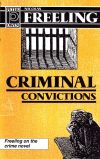
- Criminal Convictions
- Errant Essays on Perpetrators of Literary License
- by Nicholas Freeling;
- Peter Owen, 1994; xiv + 155pp; £17.95, ISBN 0-7206-0873-2

Reviewed by Owen Dudley Edwards
The relationship of Nicholas Freeling to Arthur Conan Doyle, artistically, is that Mr Freeling invented a great detective and (after about ten books) killed him off irrevocably (apart from a few retrospective short stories), thus distinguishing himself from ACD who invented The Great Detective and (after twenty-six stories) killed him off and brought him back. As Freeling remarks in the present work (p. 74):
- Holmes was to have innumerable subsequent avatars, some a bit odd. ... A Holmes copy can always be recognised, however dressed up; he is a wealthy amateur, and frequently of the leisured class, with nothing else to do and boasting highly placed relations and aristo connections. He has eccentric habits and mannerisms. And he is a superman. Nero Wolfe is a good example. Some variations of the theme show ingenious inversions, like Father Brown, apparently unpretentious until he starts to talk.
It would be nice to feel this was confessional: unfortunately there is little sign of it. Instead, there is the air of an optimistic conjurer, desperately demanding that the audience focus attention on his red herring. Freeling's late Inspector Van der Valk is not a wealthy amateur, is not Nero Wolfe, is not Father Brown. But the Holmes copies proliferated at all points of the clone-compass, and the hallmark was always to be something Holmes was not. Holmes resurrected; so did Sexton Blake (repeatedly); so did Father Brown, Lord Peter Wimsey, A.J. Raffles, Hercule Poirot, Albert Campion, James Bond, and Biggles. Admittedly Raffles died a second time in the Boer War, and stayed dead, while remembered for two flash-back books; and Poirot having lived for a half-century after his first death (in The Big Four) was then proved to have died a second time in Curtain; and Fleming may really have meant Bond to have been killed by the poison kick of Rosa Klebb (in this case derivative, presumably, from 'Clubfoot') only to be foiled by a cunning press release from his publisher; but Van der Valk showed his originality by dying once and for good, despite Freeling's 'brilliant publisher, Jamie Hamilton, who would lose his temper with me for "killing the detective". This one cannot do. This one does not do. No, but I already had.' (p.145) Gee, how come nobody thunk of it before? But what erudition!
Presumably as part of the same herring stink-screen, we are warned against Holmesclones (back on p.74):
But the superhuman quality, the ability to reach out from a languid slippered ease to collar the malefactor, would quite shortly give rise to some nasty and even downright fascist examples. These are not merely snobbish or anti-Semitic, in the modern sense racist, but show a really disgusting readiness to disregard all process of law: they use their social, physical, or intellectual superiorities quite crudely to pop out and zap anyone of whom they disapprove. Examples are the Four Just Men, or Bulldog Drummond, or the Saint.... they appeal to the adolescent mentality. the Robin Hood syndrome. I am an outlaw and I can do as I please. ... These people answer to no one ... They enjoy great privilege and lead lives of material ease and riches: they get the girls, are thanked by the Minister, ennobled by the Queen, and are admired by all right-thinking folk. The little boys bask in such fantasies and no wonder. Conan Doyle would have been horrified, but Holmes, ultimately, is responsible, and must answer for much of it.
The gravamen of this case was made long, long ago by Colin Watson in his Snobbery With Violence, and for all of the laziness of that book, it depended on much more exact reasoning and research than this mish-mash. (The Four Just Men in their most famous case murdered the Minister, Bulldog Drummond forcibly danced a fox-trot with another Minister (male), and the Saint blackmailed a third Minister for starting the Great War in response to an arms dealer's bribe. They were not thanked.) Granted that the idea of secret agent lynch law may have given some sinister support to public receptivity for Fascism, it has nothing to do with Holmes (who simply declined to reveal certain conclusions to the authorities when he believed punishment would do more harm than good). In Adam's Fall we sinned all-granted: but If Holmes deduce, Then Hitler's loose? Tch, tch.
Crime writers often make good critics, partly because their business requires close control of factual evidence, but here at least Nicholas Freeling shows originality. His grasp of factual evidence is as firm as Lord Emsworth's. Behold his apparatus criticus dissecting Dorothy L. Sayers (p. 124):
- [Strong Poison] is of interest because Harriet is within a hairsbreadth of the death penalty. The judge, while admitting doubt over her motives for murder, is inclined to condemn her for living with a man'. The historical Mrs Rattenbury was certainly in mind: inside many a chalky Victorian head was the preoccupation with sexual sins. Is fornication the first step towards homicide? However ludicrous it must now seem, that question killed Mrs Rattenbury as surely as the hangman who executed her young, pathetic lover.
Strong Poison was published in 1930. Alma Rattenbury and her lover, Stoner, were tried in 1935. Stoner was found guilty but was not hanged. Rattenbury was acquitted but committed suicide. It cannot even be a confusion with Edith Thompson and Frederick Bywaters tried in 1922, since both of them were hanged. Queen Victoria died in 1901.
The essay on Conan Doyle shows little improvement. Mr Freeling lives in France, which apparently leads him to complain that the French, who are 'greatly given to deifying minor writers: elevated Poe to a place in the stars novelty of Poe struck the French as invigoratingly original, yet it was only an exaggerated stylisation' (pp. 70,76). As a comment on the Father of the Detective Story and of the Modern Short Story, this must be hailed as Grade A Garbage. One feels Conan Doyle would be very sorry to receive better treatment at such hands. It turns out that his stories have 'no room for character' (which Freeling cites as a 'familiar' statement in their defence!). To say that Holmes and Watson have no character brings Mr Freeling's criticism quite up to his standards on Poe.
Let us stay on these rarefied heights:
- ... the deification [of Holmes, this time] has elevated some very thin contrivances to awe-struck status. Colonel Moran we are told is a great criminal but his only source of revenue [after the death of his paymaster Moriarty] appears to be cheating at cards, which is poor pickings [at £210 per night?]. A silly [in what respect?] young man has him taped after a few nights of play, while the police continue to be all at sea (not having been called in to investigate the card-cheating]. How could one possibly suspect a senior officer of the Indian Army, and famous big-game shot to boot? [By arresting him for shooting at Sherlock Holmes.] Sad stuff, this.
As ACD's beloved Macaulay said of Croker's notes of Boswell's Johnson:
- They remind us of nothing so much as of those profound and interesting annotations which are pencilled by sempstresses and apothecaries' boys on the dog-eared margins of novels borrowed from circulating libraries: 'How beautiful!' 'Cursed prosy!' 'I don't like Sir Reginald Malcolm at all.' 'I think Pelham is a sad dandy.'
Our Society's first President, the chief historian of crime fiction, Julian Symons, wrote in his Bloody Murder: 'Unfortunately, with the departure of his detective Freeling seems to have lost his way as a writer.' He seems never to have found it, as a critic.
Owen Dudley Edwards
- Article courtesy Christopher Roden, founder of The Arthur Conan Doyle Society (1989-2003).

