Review:Critical Essays on Sir Arthur Conan Doyle/Christopher Roden
This review of the book "Critical Essays on Sir Arthur Conan Doyle", by Harold Orel was written by Christopher Roden and published in the A.C.D. - The Journal of The Arthur Conan Doyle Society (Vol. 3, 1992).
Review


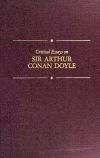
- Critical Essays on Sir Arthur Conan Doyle
- Edited by Harold Orel
- G. K. Hall & Co., New York, 1992; xiii + 290pp; U.S.$40.00, ISBN 0-8161-8865-3

Reviewed by Christopher Roden
When Professor Orel published Sir Arthur Conan Doyle — Interviews and Recollections last year a number of rare and important interviews and comments by Conan Doyle's contemporaries were made available for the first time in collected form, making it a particularly valuable volume for the student of ACD. Professor Orel has now published an equally valuable collection of critical essays: one which contains highly important articles, but which, it has to be said, has a rather misleading title.
It should be stated at the outset that not all of the essays in this volume are critical essays on, or studies of, Conan Doyle. A very large section (over half of the book, in fact) is, perhaps inevitably, taken up with essays on various aspects of Sherlock Holmes. This does not detract from the worth and importance of the volume, as there are a number of useful contributions. Following a similar format to the previous book, Professor Orel has selected essays by other writers in compiling this collection. However, the previous book had its articles complemented by extensive footnotes, something from which the new volume may have benefited.
In the Holmes section the reader encounters such names as Dorothy L Sayers ('Dr Watson's Christian name'), Stephen Knight (The Case of the Great Detective'), Christopher Clausen ('Sherlock Holmes, Order, and the late-Victorian mind'), Paul Barolsky (The Case of the Domesticated Aesthete'), and Pasquale Accardo ('The Medical Model').
For the reader who is prepared to study the wider scope offered by ACD's other works, the sections entitled 'Other Writings' and 'Spiritualism' will be of most interest. Here Professor Orel has gathered contemporary reviews of Micah Clarke, The White Company, The Refugees, Round the Red Lamp, Rodney Stone, Uncle Bernac, and many others. The reviewers include James Payn, George Bernard Shaw, and Max Beerbohm, and their work reveals a diversity of opinion on the novels which ACD was producing.
Perhaps the most valuable inclusion in the book is Andrew Lang's overview of 'The Novels of Sir Arthur Conan Doyle', which was first published in Quarterly Review (July 1904). Lang was a respected, prolific and versatile writer who was quite prepared to defend popular fiction as a medium of entertainment rather than enlightenment, and his analysis of ACD's novels is very useful reading, both for newcomers to Conan Doyle's non-Sherlockian fiction and for old hands.
As would be expected, the contributions on Spiritualism portray differing views on ACD's credulity and beliefs. We have become so accustomed to seeing the subject treated from all viewpoints, however, that it would be somewhat worrying now if both sides of the argument were not presented side by side.
Professor Orel's introduction to the book covers the contents in far greater detail than a short review could hope to do. ACD - The Journal of The Arthur Conan Doyle Society has been fortunate in obtaining the publisher's permission to make this introduction available to members. This will be particularly useful to members residing in the U.K. where there are no plans for the book to be published at the present time. The introduction is printed elsewhere in this issue, but it should perhaps be mentioned that Professor Orel discusses areas in the study of Conan Doyle which might well benefit from more detailed analysis. His arguments are perfectly valid. although an investigation of some of the points he mentions has already begun in the pages of this journal. The remaining ideas will, perhaps, provide members of The Arthur Conan Doyle Society with further inspiration. All that remains to be said is that it is highly encouraging that works of this nature are making available otherwise difficult-to-find articles. Critical Essays on Sir Arthur Conan Doyle is recommended for anyone who has a serious interest in the subject.
C.R.
- Article courtesy Christopher Roden, founder of The Arthur Conan Doyle Society (1989-2003).

