Review:Dracula's Brood/David Stuart Davies
This review of the books "Dracula's Brood" and "Nineteenth Century Suspense" was written by David Stuart Davies and published in the The Parish Magazine (No. 2, december 1989).
This review discusses two books linked by Conan Doyle's macabre fiction, especially The Parasite, praising the renewed availability of the story while debating interpretations of its sexual and psychological themes. It finds Nineteenth Century Suspense an interesting critical collection, but resists biographical overreading and argues that Conan Doyle's tale should also be understood as imaginative fiction rather than disguised confession.
Review


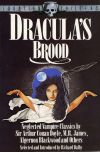
- Dracula's Brood
- Neglected Vampire Classics
- Selected and introduced by Richard Dalby (1989); Equation; 348pp: £3.99

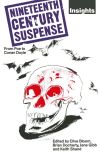
- Nineteenth Century Suspense: From Poe to Conan Doyle
- Edited by Bloom, Docherty, Gibb and Shand (1988); Macmillan (Insights); 139pp: £8.95

Reviewed by David Stuart Davies
Conan Doyle's story 'The Parasite' has a strange placing in 'Dracula's Brood' a collection of stories published by Equation bearing the sub-title 'Neglected Vampire Classics'. Neglected it certainly is, but the vampire association is open to question. The editor of the volume, Richard Dalby, views the central character of the tale, Miss Penelosa, as a kind of psychic vampire. For a definition he goes to Montague Summers: "psychic vampires... men or women who deliberately tap the lifestream of others and feed their own vitality by preying on others." This is certainly true of Miss Penelosa and the fact that this story has appeared in print after so many years prevents any further quibbles concerning its place in the collection.
'The Parasite' tells the story of Professor Gilroy, a young enquiring scientist who, despite his scepticism, falls under the power of Miss Penelosa a West Indian medium. He carries out a series of experiments in which he is hypnotised by her in order to determine the physiological and mental properties of the mesmeric state. Gradually, Gilroy realises that Miss Penelosa is taking control of his actions and forcing him to act towards her as a lover. The denouement is both dramatic and satisfying.
According to Stephen Knight, the neglect of this fascinating, and I believe very well-written, tale was due in no small part to Conan Doyle's own dislike of the story. He dropped the title from the list of publications which appeared at the front of his books. Knight maintains that this was because of the story's overt discussion of sexuality and sexual obsession. Charles Higham, always ready to pick up on a spicy morsel, seems to agree:
- "Later disowned by him, and virtually ignored by his biographers, the work remains a strikingly personal revelation reminiscent of Poe but nevertheless expressive of Conan Doyle's mysterious and highly individual character as an artist."
This theory regarding Conan Doyle, 'The Parasite' and sexual feelings is examined at length in an essay by Anne Cranny-Francis in 'Nineteenth Century Suspense' a volume devoted to examining the macabre works of Poe, Stoker, Dickens and others including Conan Doyle. Ms. Cranny-Francis maintains that because his first wife's tuberculosis required sexual abstinence from Conan Doyle and that his chivalrous code by which he lived 'forbade outside affairs', he poured his repressed sexuality and frustration into this tale.
This somewhat distasteful concept seems to be based on the implications inherent in the story that sexual forces can be channelled and controlled and more particularly on the subliminal eroticism of the opening passage:
- "The wet earth smells fruitful and luscious. Green shoots are peeping out everywhere. The twigs are stiff with their sap; and moist heavy English air is laden with a faintly resinous perfume. Buds in the hedges, lambs beneath them everywhere the work of reproduction going forward."
It is true that the writing here is vibrant, reminiscent of early D.H. Lawrence, but I believe that Ms. Cranny-Francis, like so many biographers seems to, as Sherlock Holmes might observe, overlook the obvious: the creative imagination. Surely everything in fiction is not an expression of either the author's psyche or experience but the work of clever invention. Is it not more likely that Conan Doyle's apparent dislike of this tale is because he considered that the plot trivialised Spiritualism and placed it in a bad light.
This essay on 'The Parasite' is coupled with another on 'The Lost World'. No sexual frisson here. However, 'Nineteenth Century Suspense' is an interesting read throwing, as it does, varying degrees of light on the macabre works of literary luminaries of the period as well as Conan Doyle.
- Article courtesy Christopher Roden, founder of The Arthur Conan Doyle Society (1989-2003).

