Review:Quest for the Lost World/Christopher Roden
This review of the book "Quest for the Lost World", by Brian Blessed was written by Christopher Roden and published in the A.C.D. - The Journal of The Arthur Conan Doyle Society (Vol. 10, may 2000).
Review


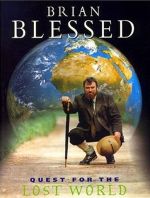
- Quest for the Lost World
- Brian Blessed
- London: Boxtree, 1999; 164pp.
- ISBN: 0-7522-1752-6; £16.99

Reviewed by Christopher Roden
If ever there was an actor suited to the role of Professor George Edward Challenger, that actor is Brian Blessed. Both his physical attributes and his mannerisms are everything that is required for the part. I've felt that way ever since I saw him as Charalambos in the 1979 TV serialisation of The Aphrodite Inheritance. Dame Jean Conan Doyle thought so, too, as I recall from a conversation with her some ten years ago. That conversation went further: we both felt that, with some softening, Blessed might have offered a good interpretation of the Conan Doyle character — and, as Conan Doyle so closely associated himself with Challenger, that's perhaps not stretching the imagination too far.
The Quest for the Lost World introduces us to the adventurous Blessed — the Blessed of mountains and jungles — and presents us with a (self)-portrait of an actor whose interests stretch far beyond the boards or celluloid. While en route for Roraima, Blessed received a fax from his London agent, saying that Luc Besson wanted him in five days' time, to begin work on his film Joan (subsequently released as The Messenger) (another Conan Doyle connection). The time scale was vital, since one day of filming had to be done to accommodate Faye Dunaway but even if he returned home, there was no guarantee of the part! 'Just a minute,' he writes, '... give up a miraculous expedition, a childhood dream, because of a day's filming with Faye Dunaway? And if I managed to get back home, there's half a chance that I wouldn't get the part anyway? "Bollocks! I'm off to the Lost World."' And you have to admire him for that.
Blessed's infatuation with his subject began in his school days. Born into a mining family, his schooldays were uninspired — he recalls completing his eleven-plus examination in twenty minutes, just because he had drawn dinosaurs over his answer paper — and it was not until a 'giant', in the form of Mrs Brown, took over his school class that schooling took on any great significance. This slight lady, in her mid-50s, set the tone on her first day by pitching an accurate board duster at the head of an unruly classmate, and then whisking him off for caning. (Ah, those were the days!) But her teaching was to be entirely different from anything Blessed had encountered: 'This is a maths lesson, I understand normally', Blessed recalls her saying; 'Let's forget about that. Instead, I'm going to read you a story, The Hound of the Baskervilles by Sir Arthur Conan Doyle.' 'We were transfixed', he writes. 'She read brilliantly, filling our minds with the haunting mystery and ending with the words, "... it was the footprint [sic] of a gigantic hound!".'
But although schooldays may eventually have brought pleasures such as this, Blessed was later to be severely punished for the sake of Conan Doyle:
- In the autumn... I was overjoyed to hear that the BBC Light Programme was to broadcast the serial that they had made of Sir Arthur Conan Doyle's The Lost World. Unfortunately it was scheduled to be at 1.00 o'clock on Wednesday afternoons for the next ten weeks! This presented me with a dilemma. Each episode ran for 45 minutes, finishing at 1.45 p.m. Afternoon school started at 1.30. If I listened to the entire episode I would be 20 minutes late at least and in such a disciplined school as ours this would not be tolerated.
Of course, the prospect of hearing The Lost World proved irresistible. I arranged to listen to it on a wooden radio in a tiny shop called Betty's Penny Bun Shop, which was only about 100 yards from the school. Once the episode was over, I ran like the wind and confronted the teachers with some cock-and-bull story about not feeling well. This was accepted for the first couple of weeks, but after that I was for the high jump.
Every pupil at school experienced the cane at least once a term, though at least half the teachers didn't feel compelled to use one. Mr Brown, the headmaster, had a long, thin cane which was in shreds at its end. This made it a deadly instrument of torture and there wasn't a lad in the school who didn't fear it. [Are we hearing shades of ACD again?]
When I was late for the third time in a row, I was summoned in front of the entire school on the podium in the assembly hall. Mr Brown was stunned to see me, as I had been his wife's favourite pupil. Several other lads went before me and were severely caned for various misdemeanours, then it was my turn. Slowly he lifted the cane to a great height and brought it down viciously on my right hand. The pain was excruciating but I kept my face straight. Twice more he hit that hand and then administered three more blows to the other.... Imagine the headmaster's surprise when I appeared on the podium the following week for further punishment. Week in and week out I was brought in front of him. It became a ritual. I was just grateful that The Lost World was only ten episodes, when it might easily have been twenty!
On the eighth occasion, Mr Brown lifted the cane and then stopped and asked quietly why I was repeatedly late. ... I swallowed hard and then said boldly, 'I listen to The Lost World, Sir, on the BBC Light Programme.'
The headmaster said nothing. I swallowed hard again and continued, 'It's being broadcast on the radio, Sir, and 'cos it lasts for three-quarters of an hour, Sir, it runs into school time. I 'ave to listen to it, Sir. Sorry, Sir, I just thought it was worth being caned for.'
Mr Brown lowered his arm and stared long and hard at me. After what seemed an eternity he motioned for me to join the rest of the assembly...
- Later that day, and much to our surprise, he came to our classroom and politely interrupted the history lesson. Mr Brown asked me to join him and face the class. He spoke gently and said, 'I think it is only right and proper that I should apologize to Blessed for all the canings I have given him over the last few weeks. I was in the wrong. I am also giving you permission, Blessed, to listen to the last episodes of The Lost World without any fear of further punishment. I find the act of caning detestable and I look forward to the day when I am no longer compelled to do it. In the meantime, as a treat, I shall ask Mr Jones to read The Lost World to all of you. ... I owe a debt of gratitude to Blessed for reminding me what a fine piece of literature The Lost World is.
Here we are witnessing schooling in Britain in the late 1940s — and we think today's society is enlightened!
When Blessed was 14, his father was very badly injured in a roof fall at Hickleton Main Colliery. As a result, his schooling ended, and he was required to contribute to the family's income, taking jobs as an undertaker's assistant, and then as a plasterer's apprentice. Throughout this time, however, some of his old teachers assisted by giving him tuition three nights a week and on alternate weekends, and he became a member of the Mexborough Theatre Guild; all of which was to lead to a full drama scholarship from the Yorkshire Education Authority, and eventually to the Bristol Old Vic Theatre School. Meantime, he had failed on his first solo mountaineering attempt — the ascent of Mam Tor in Derbyshire. His father was quick to remind him: 'Your acting career may be progressing in leaps and bounds, but yer not much cop as an explorer. And you want to climb Mount Everest and go to the Lost World, but you can't even get up Mam Tor! I could climb the bugger backwards!'
Our man progressed to Everest, and, more importantly, to Roraima (which, he seems settled in his mind, is the true location. of ACD's Lost World). The narration of the expedition is both amusing and moving — a man coming to grips with himself and with his ambitions. Throughout, however, he is conscious of Conan Doyle and ACD's influence on him; and he is intelligent in his analysis of the ecological problems we humans create in exploring previously little explored regions of the world. The final horror he expresses is the coming of oil exploration to the Roraima region of Venezuela: the true coming of the dinosaur to a region where, who knows, dinosaurs may still exist.
It was Malone who wrote: 'Our eyes have seen great wonders and our souls are chastened by what we have endured.' The same is true of Brian Blessed. He is indeed a fortunate man, and his account may prove an inspiration to others.
Christopher Roden
- Article courtesy Christopher Roden, founder of The Arthur Conan Doyle Society (1989-2003).

