Review:Strange Tales From The Strand Magazine/Christopher Roden
This review of the book "Strange Tales From The Strand Magazine", by Jack Adrian was written by Christopher Roden and published in the A.C.D. - The Journal of The Arthur Conan Doyle Society (Vol. 2, No. 2) in autumn 1991.
Review


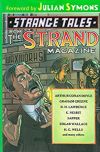
- Strange Tales From The Strand Magazine
- Detective Stories From The Strand Magazine
- Edited by Jack Adrian, with Forewords by Julian Symons;
- Oxford University Press (1991); 374pp each; £15.95 per volume

Reviewed by Christopher Roden
It seemed that the celebration of the Centenary of The Strand Magazine would pass un-noticed in the British publishing world. Here was an ideal opportunity for a major publishing event a chance to bring to the public's notice neglected authors whose work is still worthy of note; an opportunity to show what a major role The Strand played as a breeding ground for new talent. Fortunately, Oxford University Press has shown the foresight so often sadly lacking with many of our publishers today, and these two fine collections, edited by Jack Adrian, will serve as a fine testament to the initiative of OUP's Michael Cox, as well as providing enthusiasts of The Strand with hours of pleasant reading.
Each volume has its own introduction which traces The Strand's development and compares that publication with its rivals. The role of Arthur Conan Doyle in the magazine's early success is traced in most detail in Detective Stories:
'Doyle,' writes Adrian, 'is indeed an outstanding story-teller who effortlessly engages the reader's attention. His style is simple and straightforward, with none of the late-Victorian fustian to be found in the work of so many of his peers, indeed so many of his own followers; and even when he is mildly pedantic... he charms.'
Conan Doyle's successors are also noted, but here there is something of a mystery. Due acknowledgement is made of the fact that Arthur Morrison's Martin Hewitt first appeared in The Strand before moving to the Windsor Magazine, but there is no story by Hewitt; neither is there anything from Grant Allen, whose The Great Ruby Robbery was surely worthy of inclusion. These are disappointing omissions and, as Julian Symons points out in his introduction: 'there is not a single story between Charles Augustus Milverton (1904) and The Idol's Eye (1919). Are we to believe that nothing in those fifteen years made the grade, along with a similarly fallow period in the last decade of the nineteenth century?' Indeed, several of the stories in this volume fight hard to claim the title 'detective story'. Aldous Huxley's A Deal in Old Masters and A. J. Alan's Private Water are two good examples of stories which go better under the banner of 'crime' rather than 'detective' stories but, having said that, their inclusion does not detract from the enjoyment of this collection and W. W. Jacobs' The Interruption and G. K. Chesterton's The Vampire of the Village are particularly recommended.
Conan Doyle is represented by three Holmes stories: Charles Augustus Milverton, The Creeping Man, and The Lion's Mane. This appears to be an unusual selection and the adventures can hardly be considered typical of Holmes' investigations. Perhaps Mr Adrian had this in mind when he made the choice, preferring something less well-known to the more obvious A Scandal in Bohemia which marked the genesis of Sherlock Holmes in The Strand. The three Holmes stories are supplemented by Mgr. Ronald Knox's superb pastiche The Adventure of the First Class Carriage.
If I had to choose between the two volumes, Strange Tales would have my vote simply because there are some fine chillers in that collection. There is a short, gripping tale by Graham Greene, All But Empty; another W. W. Jacobs story, His Brother's Keeper and W. L. George's chilling Waxworks. Jack Adrian has chosen D. H. Lawrence's only Strand story Tickets, Please! to present a somewhat different Lawrence portraying human relationships, emotions and attitudes in the surroundings of a tram company. Hugh Walpole's The Tarn is a chiller set in the Lake District — but a Lake District far removed from that of his Herries cycle of novels; L de Giberne Sieveking's The Prophetic Camera is a Wellsian-type tale, and Wells himself is represented by The Queer Story of Brownlow's Newspaper.
There are three further Conan Doyle stories in this volume: The Silver Mirror, How It Happened and The Horror of the Heights, and they are well chosen, showing Doyle at his creative best and illustrating, once more, the variety of his writing.
Between them, these volumes offer fifty four short stories and remarkable value for money. The books are attractively produced with highly colourful dust wrappers and if we are left wondering why there is no Wodehouse this is the only minor criticism.
Both volumes are worthy of a place in your collection — Bravo Jack Adrian! Bravo OUP!
- Article courtesy Christopher Roden, founder of The Arthur Conan Doyle Society (1989-2003).

