Review:The Case Files of SH: BLUE/Doug Elliott
This review of the book "The Case Files of Sherlock Holmes: The Blue Carbuncle", by Arthur Conan Doyle was written by Doug Elliott and published in the A.C.D. - The Journal of The Arthur Conan Doyle Society (Vol. 10, may 2000).
This review praises The Case Files of Sherlock Holmes: The Blue Carbuncle as a rich and inventive collection of essays that opens many fresh angles on a single Sherlock Holmes story. It highlights the volume's scholarly variety, originality, and appeal for Sherlockian readers, while noting a little repetition on a few familiar points.
Review


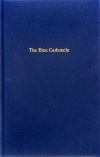
- The Case Files of Sherlock Holmes
- The Blue Carbuncle
- Edited by Christopher Roden & Barbara Roden
- Ashcroft, B.C.: Calabash Press, 1999; 202pp.
- ISBN: 1-899562-64-8 (Hardback) £19.50 / U.S.$31.50/ Cdn$42.50
- ISBN: 1-899562-65-6 (Paperback) £13.50/ U.S.$21.50 / Cdn$30.00

Reviewed by Doug Elliott
'The Blue Carbuncle', of all the tales of the canon, holds a very special place in my heart. Among my possessions in 1978 were five volumes of the Pan Books paperback Holmes series. I had no real appreciation of the Sherlockian world at that time, though I was vaguely aware of the BSI. I only knew that I loved the stories. Sometime that year I wandered into Sherlock's antiquarian bookshop in Toronto and, no doubt naïvely prompted by the proprietor's name, asked if she had anything about Sherlock Holmes. I walked out $25 the poorer but richer in wealth unaccountable, clutching the slim blue volume of The Blue Carbuncle, published by the BSI in 1948.
At home I began to read Christopher Morley's introduction. 'Surely one of the most unusual things in the world: a Christmas Story without slush.' Reading on, I became aware for the first time that there was a different way of looking at the Holmes stories. In a few short pages, Morley considered the meaning behind 'compliments of the season', lingered over the details of the Baker Street rooms, and pondered the many opportunities the tale offers for scholars. 'There are many kinds of readers,' he noted; 'the best and brightest of them probably wish to be amused, not to deduce or infer. At the time I was most definitely of that ilk (not to take the 'best and brightest' part too much to heart), and Morley's delightful piece began subtly to steer me in the deduce-and-infer direction. I read the story with eyes and mind opened very much wider, and the canon would never be the same for me again. Within the year I discovered the Writings Upon the Writings, the Bootmakers of Toronto; and the rest, as they say, is history. That slim blue volume is now a treasured part of my Sherlockian and Doylean collection, and I always know exactly where to put my hands on it. (The Pan series also had introductions, by such luminaries as Eric Ambler, Len Deighton, John Fowles, Hugh Greene, and Angus Wilson. I've often wondered why these notes did not push me over the edge in the way Morley's did. I think what made Morley's essay memorable was his evident delight in the story, far beyond mere literary appreciation; and his playfulness with the language: viz. 'bashful British meiosis', rather than simply 'understatement'. I commend it to the reader's attention.)
In the fourth volume of Calabash Press's series, The Case Files of Sherlock Holmes, Christopher and Barbara Roden have collected eighteen new essays on matters carbuncular. There is a great deal of deduction and inference within its covers, as the contributors plunge merrily into the time-honoured pastime of delving for treasure in Conan Doyle's popular tale of 'follow the jewel'.
Christopher Roden opens the collection with 'A Blue Christmas', a survey of what has previously been written about the story, focusing on the major touch points of the tale: the hat, the goose, the jewel, the Alpha Inn, and others. He makes frequent reference to two of my favourite pieces on the subject, S. Tupper Bigelow's 'The Blue Enigma' (The Baker Street Journal 11:4, December 1961) and 'Barrred-Tailed Geese' (The Sherlock Holmes Journal 6:4, Spring 1964), great exemplars of research, deduction, and wit in the finest Sherlockian tradition.
I turned to the second essay, 'Problems of a Wild Goose Chase' by Peter H. Wood, somewhat apprehensively. Surely all that could be said on the subject had already been written, then summarized by Roden. What value can seventeen more writers possibly add to the body of literature? Fortunately, the answer is 'plenty', and the remainder of the collection displays ample evidence of the creativity and inventiveness for which Sherlockians are famous.
The contributors, a diverse group from the U.K., the U.S., and Canada, display a wide variety of writing styles from dense academic to light and controversial. Differing degrees of scholarship are also evident, from Wood's hilarious look at what Breckinridge the poulterer might have made of the whole affar, to Diana Barsham's 'Source for the Goose... Sauce for the Gander: Christmas Riddles in "The Blue Carbuncle", which invokes Freud and announces as 'uncontroversial' the position that 'The Blue Carbuncle' 'is a story about impotence cunningly concealed in the wrappings of a Christmas tale".
Considering the unlikelihood that the editors doled out specific assignments, the absence of repetition is quite remarkable, save in one area. Bigelow ('The Blue Enigma') notes: 'It is certain that somewhere in the Writings Upon the Writings I have read that the first thing any Sherlockian neophyte does is to write an article for one of the publications exposing the many errors in "The Blue Carbuncle". Perhaps too often in this volume we are reminded that there is no such thing as a blue carbuncle, that there is no Amoy River in China, that one would have been unlikely to find geese at the Covent Garden market, and that Sherlock's are not the only reasonable interpretations of the evidence of Henry Baker's hat.
This is a small point, however, for in general the evidence is of uniqueness rather than sameness: several of the writers (Brad Keefauver, Owen Dudley Edwards, Catherine Cooke, and Diana Barsham) examine the Christmas themes in the story-and the results are quite different in each case.
Some highlights: S. E. Dahlinger's 'Blue Notes' beautifully expresses some of the personal delights derived from the story. Owen Dudley Edwards, in his 'The Compliments of the Season', provides the usual wealth of densely packed insight drawn from historical and literary connections: 'Sherlock Holmes died at least ten times, and was resurrected at least nine' is his opener. Nicholas Utechin's 'A Swarm of Humanity: Class in "The Blue Carbuncle" observes that Holmes and Watson are uncharacteristically rude and disparaging in this story to characters of the lower social orders.
The volume is illustrated with the well-loved Pagets from the original Strand, as well as five new drawings by Paul Lowe. All in all, a fine tribute to Sir Arthur's Christmas standard, and a mine of new thoughts and inspirations, admirably suited to join its fellow Case Files volumes in any well-stocked Sherlockian library.
Doug Elliott
- Article courtesy Christopher Roden, founder of The Arthur Conan Doyle Society (1989-2003).

