Review:The Great Shadow/Catherine Cooke
This review of the book "The Great Shadow: Arthur Conan Doyle, Brigadier Gerard, and Napoleon", by Clifford S. Goldfarb was written by Catherine Cooke and published in the A.C.D. - The Journal of The Arthur Conan Doyle Society (Vol. 7, 1996/7).
This review examines Clifford S. Goldfarb's The Great Shadow: Arthur Conan Doyle, Brigadier Gerard, and Napoleon, a comprehensive study of Conan Doyle's Napoleonic fiction including the Gerard stories, The Great Shadow, and related works. It highlights Goldfarb's research on sources, manuscripts, adaptations, and historical context while assessing his critical analysis of Conan Doyle's treatment of the Napoleonic era.
Review


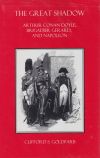
- The Great Shadow: Arthur Conan Doyle, Brigadier Gerard, and Napoleon
- by Clifford S. Goldfarb
- Ashcroft: Calabash Press, 1997; 234pp; Cdn$27.50/U.S.$ 21.00 / £14.00 (Paperback) Cdn$45.00/U.S.$35.00/£21.50 (Hardback), ISBN: 1-899562-30-3 (Paperback); 1-899562-29-X (Hardback)

Reviewed by Catherine Cooke
Goldfarb points out in his Preface that to the best of his knowledge, no one book or even article has ever examined Conan Doyle's Napoleonic stories, though many have touched on them. Several editions of the Brigadier Gerard stories in particular have, however, appeared in the last decade or so, making the time ripe for a critical study of the whole of Conan Doyle's Napoleonic work.
The first task of anyone embarking on a work such as this is to decide exactly which works are to be included. Some are indisputable Gerard, The Great Shadow, Uncle Bernac, the short stories 'A Foreign Office Romance' and 'A Straggler of '15', and the latter's theatrical version Waterloo. Goldfarb also includes in his definition Rodney Stone, set in England and with no scenes of war, but permeated with the atmosphere of the age.
As Goldfarb points out, nearly all these works appeared from 1892 to 1906, with 'The Marriage of the Brigadier' coming in 1910, a period of about one-fifth of Conan Doyle's life, when most of his other historical fiction was also being written. The Napoleonic works are therefore only a small part of Conan Doyle's literary oputput. Goldfarb is honest in his attitude to these works and concedes that only the Gerard stories are really likely to be of any real interest today, though he feels that The Great Shadow may be Conan Doyle's best fictional treatment of the horrors of war. The Gerard stories, however, are 'Conan Doyle's best short stories, well-crafted and superbly written ... are almost wholly unknown to the public and even to many Sherlock Holmes aficionados'. They deserve to be better known.
Charles Dickens is thought of as giving public readings of his fiction, and the effect on his audiences of the death of Nancy from Oliver Twist is well-known. Simon Callow has recently recreated such readings with a live audience for British television, and the effect was uncanny. Conan Doyle is not generally thought of as having given public readings, but Goldfarb starts his book by disclosing that Conan Doyle did just that with Gerard, quoting Frederic Whyte. He had the gift for it: at the climax of 'How the Brigadier Slew the Fox', for instance, 'the entire room was in convulsions and the author himself, catching the infection, could scarcely continue'.
Using such papers and letters which are available in libraries and private collections, Goldfarb sketches in the background to the writing of the Brigadier Gerard stories, reconciling inconsistencies where they occur, and giving an overview of their publishing history. He quotes a some length from these papers, allowing Conan Doyle to speak for himself, always welcome to those less able to consult the original papers themselves.
Particularly interesting and not something that is usually discussed about Conan Doyle is the subject of remuneration. The price offered by Colliers for reviving Holmes is often quoted and the published manuscript of 'The Lion's Mane' allowed us to see what was probably Conan Doyle working out the number of words, and by extension, what he would be paid. Goldfarb has done some maths of his own from the information available and demonstrates the sort of figures Conan Doyle would have been receiving. Finally, Goldfarb briefly examines the Gerard manuscripts which are accessible, looking at Conan Doyle's working method and how the stories changed from manuscript to serial to book publication.
In examining the individual texts, Goldfarb does not approach them from a chronological point of view but in order of what seems to be their perceived significance. Gerard thus comes first, with the discussion being widened to take in the little-known contemporary stage productions. 'A Straggler of '15' is then followed by The Great Shadow, 'A Foreign Office Romance', Uncle Bernac and the more peripheral Rodney Stone.
One can always argue about the approach taken in a book. The works could have been examined in the order of writing/publication, and some might take issue with the critical judgement made about each work. Goldfarb's approach has its merits, not least of which being that it allows the Gerard stories which appeared from December 1894 to September 1910 to be taken as a corpus, rather than in chunks, interspersed with the other works. It does, on the other hand, tend to obscure any development in Conan Doyle's outlook and approach which might be seen over the eighteen years during which the works appeared.
In discussing Gerard, Goldfarb mixes the examination of the narrative style of the stories with that of the character of Gerard himself. Gerard had no Watson figure, he was his own narrator and his style reflects his character-that of the traditional Gascon, in the same tradition as D'Artagnan. Conan Doyle seems to have some trouble with the character-keeping his readers' sympathy despite the swagger, pride and think-headedness. Different stories show this as Gerard moves between buffoon and sophistication. Goldfarb draws out an interesting parallel between Conan Doyle's own relationship with his mother and the deep love Gerard has for his, placing only her before the Emperor in his thoughts. The influence of the mother is to be seen also in the memoirs of Baron de Marbot, not infrequently staying with his mother while recuperating from some wound.
Details of the two plays produced in the early years of this century are not easy to come by, so Goldfarb's discussion of them is particularly valuable. Drawing on published reviews and accounts and on the one playscript that is available, he traces their history and assesses Conan Doyle's likely involvement with the two.
Gerard also appeared on film, in two silent films, one sound film and one television play. All are discussed, though the first, starring Lewis Waller, does not seem to have survived. The only one likely to have been seen by present day student of Doyle is the 1969 Adventures of Gerard, which credited Adrian Conan Doyle as technical advisor. The contemporary reviews quoted are mixed and Goldfarb's assessment of it is far from complimentary (and one with which the present reviewer heartily agrees!)
Any discussion of the Gerard stories begs the question, as an examiner might put it, compare and contrast the stories of Brigadier Gerard and Sherlock Holmes. Goldfarb does so, taking the opportunity to demonstrate Conan Doyle's varying techniques, such as the standard opening of a Holmes story in 221B Baker Street as against the standard café scene of a Gerard tale. Parallels are also drawn between plot elements common to both cycles, such as secret societies, hidden royal/imperial caches and detached ears. The comparison is taken one step further towards the end of the study as Goldfarb considers a little-known pastiche from 1903 pitting Gerard against Holmes himself, one of only four Gerard pastiches he has found.
The Gerard stories differ in another way from those of Holmes, in that in the former humour is intentional and almost always present, an aspect of the style that Goldfarb highlights well, demonstrating its use in characterisation. He points out, too, that often the humour is sharpest when Conan Doyle is poking gentle fun at the British and not infrequently at his own interests, such as cricket, boxing and, par excellence in the Gerard cycle, fox-hunting.
The Battle of Waterloo was one which fascinated Conan Doyle, perhaps influenced by his mother's stories of his great-uncle Major-General Sir Denis Pack at the battle. Conan Doyle considered 'A Straggler of '15' to be his best story. Goldfarb again outlines the historical events which formed the basis of the story, and by extension the play Waterloo. As with the Gerard plays, the performance history is sketched out, including what might have been thought a fairly obscure (if very enjoyable) production at Bateman's under the auspices of the National Trust in 1991.
It is probable that relatively few people will have read The Great Shadow or Uncle Bernac recently; many will not even own copies. Those who are not familiar with them will appreciate Goldfarb's rapid outlines of the plots and the passages quoted to give a flavour of their atmospheres. Even here we cannot escape Gerard, who appears in the latter novel as Etienne Gérard, giving rise, as Goldfarb suggests, to some scope for 'Gerardian studies' along the lines of the Sherlockian Game. Uncle Bernac presents critics with some problems. Goldfarb compares the serial and book publications and quotes at some length accounts of historical events against what Conan Doyle made of them. He has to concede, however, that the novel is a failure, the plot is thin and disrupted by a long and unnecessary, if interesting, digression on Napoleon and his court. If Goldfarb's book makes one want to reread, or read the Gerard stories and some of the other works discussed, it does not make Uncle Bernac sound particularly enticing!
Perhaps the most obscure of the works under consideration is 'A Foreign Office Romance', which also receives the least treatment in this study. A little over a page is given to its history and plot and a to brief discussion of whether the protagonist was some alter-ego for Gerard. Rodney Stone is likewise given shorter treatment, not being in the mainstream of the Napoleonic works.
Perhaps one of the most interesting aspects of Goldfarb's work is the discussion of Conan Doyle's sources. He explains real characters who appear who are less well-known to the average reader, such as the patriotic German poet Karl Theodor Körner who appears as Korner in 'How the Brigadier Played for a Kingdom'.
A whole section of the study is given over to Conan Doyle's research and sources. Goldfarb has seemingly tracked down every title noted by Conan Doyle in his prefaces and lists of sources and examines each to assess its part in the resulting works. The late nineteenth century was one where there was something of a revival of interest in Napoleon and his period. Many of the fictional influences are today virtually forgotten, with perhaps only Hugo's Les Misérables having survived in popular culture and that due more to films and the musical.
The greatest consideration is, understandably, given to the memoirs of Baron de Marbot. First available in English in 1892, Goldfarb feels Conan Doyle read the memoirs in March 1893, when he was already deeply interested in the period and had already written 'A Straggler of '15' and The Great Shadow. If Gerard's adventures seem at times a trifle far-fetched, one only has to read Goldfarb's examination of those of Marbot to see how closely Conan Doyle followed them. Marbot and Gerard both served in much the same campaigns, suffering much the same privations. There are other, less well-known and accessible historical sources than the writings of Marbot, however, and Goldfarb has sought out these and gives space to each. Indeed, his research for this study is as extensive as that of Conan Doyle himself when writing his works. Consideration is also given to how Conan Doyle's treatment of war and its horrors varies between the various works, be they primarily to entertain and amuse, like Gerard, or more realistic, like The Great Shadow.
Throughout his book, Goldfarb has noted and discussed what other writers on Conan Doyle have said about the works under consideration, writers such as Pierre Nordon and Owen Dudley Edwards. But it is also interesting to see what Conan Doyle's contemporaries thought, allowing us to see how well the novels and stories have stood the test of time. Even then, critics were comparing Gerard with Holmes, some of them unfavourably.
Such consideration brings Goldfarb to the thorny problem of Conan Doyle's stature in literature was he just a popular writer or is he worthy of academic study. In order to answer this question, we must first define literature, which Goldfarb does quoting Conan Doyle's own view of the art of fiction as being able to interest all sections of society, not merely one clique. Here again, Goldfarb takes each of the main writers on the works and gives the views of each separate consideration. Critical opinion does seem to be changing about Conan Doyle's work and, as Goldfarb points out, with only Dickens now seemingly being read as widely outside academic courses as Conan Doyle, there must be some merit in the latter's writing for him to have outlived his contemporaries.
As is usual with publications from Calabash Press, the book is well-produced and more than usually well illustrated. The Strand illustrations for the Holmes stories are so well-known these days as to be hackneyed as illustrations to books about Holmes. Those for the Gerard stories are, however, rarely seen except by those fortunate enough to own the relevant Strand Magazines themselves. This book contains over a dozen of W. B. Wollen's detailed illustrations, several of them showing Napoleon himself. That of Napoleon and Gerard used on the cover is particularly apposite. In addition there are a reproduction page and cover from The Strand, a letter from Conan Doyle about Gerard, a portrait of Baron de Marbot and a couple of stills from the 1969 Gerard film. One can only add that a still or two of Lewis Waller's Gerard would have been a nice addition, but perhaps copyright problems prevented this.
There is much supplementary matter. Appendix I gives plot summaries and word counts for all the Gerard stories. Original serial publication dates would have ben helpful here, though they are listed in the Bibliography. Appendix II gives the current locations of the known manuscripts, together with some comments on any salient points such as annotations. Extensive notes on sources and references are also collected together at the end of the book. This is perhaps preferable to keeping them in the body of the text. It makes the bulk of the book far more readable, yet allows the more serious reader to check particular points. A lengthy bibliography covers Goldfarb's own sources, as well as those of Conan Doyle and the publication histories of all the works being considered in this study, as well as those other works by Conan Doyle referred to in the text. Finally, as is indispensable in a book of this nature, there is an index, which picks up all the major points one might wish to check, though one might quibble with the cross-referencing of titles to their authors' entries, which involves the reader in a paper chase through a number of references in the search for one title. Such things are largely a matter of personal preference and the important thing is that there is an index.
Calabash Press is to be thanked for rescuing this book when it got caught in the business vagaries of the mainstream publisher with whom it was originally placed. Whatever may be said of novels such as Uncle Bernac, on which critical opinion is certainly divided, Brigadier Gerard has been overshadowed by Sherlock Holmes for far too long. As with other aspects of Conan Doyle's work, the almost traditional emphasis on the study of Holmes himself (of which many of us are guilty!) has turned critical attention away from the rest of Conan Doyle's fiction. Goldfarb is to congratulated for grasping the Napoleonic nettle and for providing such a comprehensive study. It is an indispensable addition to any Doylean's bookcase.
Catherine Cooke
- Article courtesy Christopher Roden, founder of The Arthur Conan Doyle Society (1989-2003).

