Review:The Idle Trade: On Doctors Who Were Writers/David Stuart Davies
This review of the book "This Idle Trade: On Doctors Who Were Writers", by David Waldron Smithers, was written by David Stuart Davies and published in the A.C.D. - The Journal of The Arthur Conan Doyle Society (Vol. 1, No. 3) in september 1990.
Review


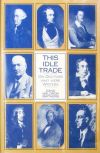
- This Idle Trade — On Doctors Who Were Writers
- by David Waldron Smithers
- Dragonfly Press, 1990; 272pp.; £10.95

Reviewed by David Stuart Davies
This Idle Trade considers the life and work of several famous doctor-writers. The historical range is great, encompassing two hundred and fifty years and includes, among others, Oliver Goldsmith (1730-1774), Tobias Smollet (172!-1771), John Keats (1795-1821), Somerset Maugham (1874-1965), as well as Arthur Conan Doyle. It is interesting to note in Smithers' preface that he describes A.C.D. as a successful general practitioner which is certainly not how many other biographers have presented him. Whether this is a considered Opinion, or a convenient bland term of reference, I know not; but it is, nonetheless, refreshing to see such a description in print.
Obviously, in covering seventeen literary doctors in one book, Smithers is really only providing an introduction to their life and work. Conan Doyle, for example, receives only eleven pages, most of which after a sketchy biography, deals with Sherlock Holmes. However, there is a consideration of the fascination of detective stories and mention of Al Rodin's and Jack Key's crusading work on A.C.D. and the medical details and the doctors who feature in the Holmes stories, alphabetically from Moore Agar in The Devil's Foot (1910) to Wood in The Valley of Fear (1915).
Talking of Rodin and Key's Medical Casebook of Doctor Arthur Conan Doyle (reviewed in A.C.D. - The Journal of The Arthur Conan Doyle Society, Vol.1, No.1, Sep. 1989), Smithers observes:
- "However, had it not been for Holmes and Watson they would not have spent so much time adding to our enjoyment through that part of their research which deals with Doyle's interesting if modest medical achievements. Who is to say the public is not right in its choice of what to remember about an author, for it is for them that his books are written. If there has really been any lack of regard for Conan Doyle's literary achievements it has been in undervaluing those of his works which have nothing to do with Holmes and Watson, for example such excellent tales as Micah Clarke, The White Company and Rodney Stone."
Smithers has likeable and agreeable style, but it is true to say that there is nothing here that is really fresh to a serious Doylean or Sherlockian. However, what I did find interesting was the earlier part of the section on Detectives and Doctors which deals with Richard Austin Freeman, creator of the scientific detective Doctor John Thorndyke.
There are some interesting parallels between Conan Doyle and Freeman. Thorndyke is partly based on Professor Alfred Swaine. Professor of Medical Jurisprudence at Guy's Hospital from 1831 to 1877, just as Professor Joseph Bell provided a model for Sherlock Holmes. Freeman's "Watson" was another doctor, Christopher Jervis. Smithers observes:
- "(Freeman's) work had many similarities and some rivalry with that of Conan Doyle".
It could be said that Freeman wrote the first "faction" — he carried out every experiment which he described in his stories and featured medical developments of the day in the plots. For example, he used radiology in 1911 to show that a mummy case in the British Museum really contained a skeleton of a vanished Egyptologist, recognised because it could be seen on the x-ray that he had had his fractured patella wired.
Ironically, it was Freeman's interest in the scientific aspect of the stories, one which Holmes himself would have heartily supported, that robbed them of a continuing appeal. It would seem that Freeman lacked the consummate story-telling skills possessed by Conan Doyle; the Thorndyke tales are without those dramatic, bizarre and atmospheric touches which permeate their way through all the Holmes stories. Smithers makes this point:
- Most important of all, is the fact that the reader while unable to compete in the interesting and complex laboratory work of Dr. Thorndyke, always feels that he might manage Sherlock Holmes' deductions if only he was clever enough... Conan Doyle and Austin Freeman were masters of their chosen art and complimentary rather than in competition for the highest awards in fictional criminology.
An entertaining read then with some pleasing nuggets but, judged as a strictly Doylean work, This Idle Trade is too bland for the serious student of A.C.D.
- Article courtesy Christopher Roden, founder of The Arthur Conan Doyle Society (1989-2003).

