Review:The Mammoth Book of Historical Whodunnits/Barbara Roden
This review of the book "The Mammoth Book of Historical Whodunnits", edited by Mike Ashley was written by Barbara Roden and published in the The Parish Magazine (No. 9, december 1993).
The review praises this historical detective anthology as a rich, wide-ranging collection spanning from ancient Egypt to 1910, with several especially enjoyable contributions. Barbara Roden regrets the absence of Arthur Conan Doyle's own qualifying stories, but concludes that the book is excellent value and a strong choice for mystery lovers.
Review


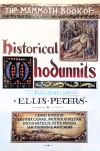
- The Mammoth Book of Historical Whodunnits
- edited by Mike Ashley
- Robinson, 1993; xix + 522pp; £5.99; ISBN 1-85487-229-X

Reviewed by Barbara Roden
Previous Mammoth titles from Robinson have included several of ACD's tales, so it is unfortunate that none of his detective stories met editor Mike Ashley's strict rule: in order to qualify, a story must be set in a period before the author's birth. The only detective story by ACD that came close to qualifying was 'The Silver Hatchet', written in 1883 but set in 1861, just two years after Conan Doyle's birth: and, as Mike points out in his Introduction, the tale does not contain very much detecting. However, he managed to include Holmes by using 'The Case of the Deptford Horror', one of the pastiches written by Adrian Conan Doyle.
The collection of twenty-three tales spans several centuries: the first story, Elizabeth Peters' 'The Locked Tomb Mystery', is set in the fourteenth century B.C., while the last one, 'Five Rings in Reno', is set in 1910. Written by Edward D. Hoch under the pseudonym R. L. Stevens, the story features Conan Doyle as detective and speculates on what might have happened if ACD had accepted the invitation to act as referee for the heavyweight championship fight between Jack Johnson and Jim Jeffries, which was held in Reno, Nevada on 4 July 1910. It is a pleasing mix of fact and fiction, with Conan Doyle meeting Jack London while helping a damsel in distress, solving a crime, refereeing a prize fight, and trying (without much success) to separate himself from his detective creation.
The volume is a fascinating mix of stories, and it was pleasing to meet up with Melville Davisson Post's Uncle Abner and Lillian de la Torre's Dr Sam: Johnson, Detector, once more (sadly, de la Torre died at the end of September). Besides the stories, there is a Foreword by Ellis Peters, an Afterword on 'Old Time Detection' from 1902 by Arthur Griffiths, and a comprehensive Appendix entitled 'The Chroniclers of Crime: The forerunners of Sherlock Holmes'. Like others in the series, this is excellent value for the money, and deserves a place on the shelf of all lovers of mystery and detection.
- Article courtesy Christopher Roden, founder of The Arthur Conan Doyle Society (1989-2003).

