Review:The Professor and the Madman/Christopher Roden
This review of the book "The Professor and the Madman", by Simon Winchester was written by Christopher Roden and published in the A.C.D. - The Journal of The Arthur Conan Doyle Society (Vol. 9, june 1999).
This review presents The Professor and the Madman as the story of Dr W. C. Minor and the making of the Oxford English Dictionary, while stressing that Minor also belongs to the wider Strand Magazine world associated with Arthur Conan Doyle. The Conan Doyle connection is therefore indirect: the book is not about Conan Doyle, but about a figure linked to the same literary and magazine milieu, with an added Holmes-related nod in the reviewer's closing remarks.
Review


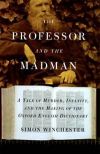
- The Professor and the Madman
- Simon Winchester
- New York: HarperCollins, 1998; xi + 242pp. ISBN: 0-06-017596-6; US$22.00/Cdn$32.00
- Published in the U.K. as The Surgeon of Crowthorne

Reviewed by Christopher Roden
Besides providing a wealth of material from the pen of Arthur Conan Doyle, The Strand Magazine acts as a first-class source for information on many fascinating people of its times. Most notably, its 'Portraits of Celebrities' series furnishes enlightening biography; but, occasionally, one comes across articles dealing with people whose significance only becomes much clearer at the remove of seventy or eighty years. One such person was Dr W.C. Minor, whose story was told in the September 1915 and January 1916 issues of The Strand.
Dr Minor's story is a strange one. Born in Ceylon in 1834, of American parents, he travelled to America in his teens, and began the task of studying medicine at Yale University, eventually graduating, aged twenty-nine, from Yale Medical School with a degree and specialization in comparative anatomy, in 1863-at a time when the American Civil War was some eight hundred days old. The war and its horrors were alien to a man who, his friends would say, was all too sensitive: he was courteous to a fault, somewhat academic, and rather too gentle for the business of soldiering: he read, painted watercolours, and played the flute-a man seemingly out of place in the Virginia of 1864.
Minor's eventual insanity-for this is the tale of a madman — was possibly born of his being required to brand an Irish deserter, such being the punishment of the court which sat in judgment on him. From that day onwards, Minor had a fear of the Irish, and believed that he was being pursued by Fenians bent on avenging the harm done to their fellow countryman. He became a monomaniac, and following numerous transfers within the army, was institutionalized in Washington. The decision made as to his future was that he should be considered one of the 'walking wounded'. He was discharged from the army, retaining pay and pension for the rest of his life. In October 1871, planning to spend a year or two in Europe, Minor stepped off a boat in England and headed for London. He had money, books, easel, watercolours, and brushes. He also carried his gun.
The murder of George Merrett, a brewery worker, in Lambeth on 17 February 1872, first brought Dr Minor to the notice of the British authorities. Minor's obsession with the Irish undoubtedly led to Merrett being mistakenly identified as one of the Fenians pursing the American doctor. The result was that Minor was arrested and charged with murder. As far as the police were concerned, the case was clear cut-until it was discovered that Minor was an American. When Minor appeared before the Court, the judge instructed the jury to find him not guilty on grounds of insanity; his sentence was that he be detained in safe custody until Her Majesty's Pleasure be known. Thus it was that Dr William C. Minor became designated in Britain by Broadmoor File Number 742, and that he was held in permanent custody as a certified criminal lunatic'.
Winchester's style in The Professor and the Madman is to jump between events. In some ways this can be a little distracting during the reading, but the end result is rather like a film interspersed with well-integrated flashbacks. For this is not merely the story of Minor's insanity-the overriding purpose of the narrative is to relate the part Minor played in the creation of the greatest work in the English Language: The Oxford English Dictionary.
Whilst lexicography per se might seem a strange subject around which to build what is almost a novelisation of events, the story of the efforts to bring about the OED is absorbing and fascinating. For the purposes of this review, it will suffice to relate that, on 1 March 1879, a document was formally agreed by Oxford's Delegates that James Murray was to edit, on behalf of the Philological Society of London. The New English Dictionary on Historical Principles, which would spread itself across an estimated seven thousand quarto pages in four thick volumes and take ten years to complete. The time-scale and volume of work was, in fact, the underestimate of all underestimates. Nonetheless, Murray's Scriptorium, where much of the work of compilation was carried out, saw its beginnings from that date.
The involvement of Dr Minor seems to have come about by a very strange set of circumstances. Minor's remorse for the murder of George Merrett led him to write to Merrett's widow, offering to provide assistance for her family. He could well afford it: his pension from the American army provided him with more than sufficient for his needs, beyond the purchase of his beloved books. Mrs Merrett accepted, and matters developed further when she asked permission to visit Minor in Broadmoor. Seeing his interests, and (Winchester suggests) developing a liking for her husband's murderer, she offered to deliver the parcels of books he had ordered from the dealers in London. The Broadmoor authorities had not considered Minor to be dangerous, either to himself or others, and he had been allowed to occupy two cells-one of which had been given over to his ever-growing library. It seems that in one of the parcels of books delivered to him, Minor came across James Murray's advertisement for help in compiling his dictionary. Seeing this project as something which would give him purpose in life, he seized upon the opportunity to be of assistance. Thus began a relationship which would result in Murray writing, in 1899: ... So enormous have been Dr Minor's contributions during the past 17 or 18 years, that we could easily illustrate the last 4 centuries from his quotations alone.'
His work for what would become the OED gave Minor a purpose in life. And yet his monomania was never far away. Daily he would report, more latterly to the most unsympathetic Dr Brayn (the second Governor under whom Minor was confined at Broadmoor), that he was physically abused each night by fiends which came from the floor of his cell. Besides physical abuse by fiends, Minor was an obsessive self-abuser: in his youth he had contracted venereal diseases, and is said to have been a regular frequenter of the tenderloin districts in the cities in which he was located. Winchester, with seemingly no evidence on which to base his view, suggests that Minor may have had a sexual relationship with Mrs Merret, the widow of his victim, during her frequent visits. This may have been the case; and it may have been the reason why Minor carried out the most vicious act of self-mutilation imaginable: it is certainly a brave, foolhardy, and desperate man who will perform an autopeotomy-the more so when the operation is carried out in unsterile conditions, and with a penknife.
Whatever the reasons, Minor survived, though his madness seems never to have improved. Finally, in 1910, William Minor was repatriated and transferred in the care of his brother to St Elizabeth's Asylum in Washington, D.C. He stayed there until 1919, when he was transferred to a hospital for the elderly insane in Hartford, Connecticut, where, on 26 March 1920, he died peacefully in his sleep. Winchester reports that Minor's grave is 'small and undistinguished, made of reddish sandstone' and bears only his name. "Dr. William Minor,' he writes, "who was among the greatest of contributors to the finest dictionary in all the English language, died forgotten in obscurity, and is buried beside a slum.
The Oxford English Dictionary, begun so enthusiastically in 1879, was a further eight years in the making: the announcement of its completion was made on New Year's Eve, 1927. Unfortunately, James Murray had died twelve years before the work to which he had devoted so much energy was completed. In my own copy (that remarkable two-volume edition with the magnifying glass!), the name of Dr W.C. Minor appears simply as one of a list of 'contributors': after reading this splendid story, one feels that small credit somewhat undervalues his contribution.
I cannot end without noting that a review of this book was submitted to amazon.com by a Mr Mitchell Redman, who stated: I am a New York playwright who, in 1995, completed a full-length drama focusing on James Murray and William Minor, called "The Dictionary", and whose help Mr. Winchester sought when he was first considering writing his book. (Winchester mentions me in his Acknowledgments. He made a strenuous effort to enlist my help and, when I declined, offered to buy my research, which I also turned down.)' Redman continues by nit-picking a few minor items in Winchester's book. Perhaps some features of Mr Redman's research may have added to Winchester's narrative. However, I rather doubt it. What I cannot understand is the self-seeking glory that some researchers attach to selfishly guarding their own discoveries, when the availability of information does little but benefit us all.
The Professor and the Madman is a delightful, yet somewhat sad, story, well told by Simon Winchester. The audio-book, read by Simon Jones (who recently playedSherlock Holmes in a TACT production of Gillette's play in New York), is also extremely well done (ISBN: 0-694-52066-7; US$18.00/ Cdn$26.50). Both versions of the story are highly recommended.
Christopher Roden
- Article courtesy Christopher Roden, founder of The Arthur Conan Doyle Society (1989-2003).

