Review:The Rise and Fall of the Victorian Servant/Barbara Roden
This review of the book "The Rise and Fall of the Victorian Servant", by Pamela Horn was written by Barbara Roden and published in the The Parish Magazine (No. 14, september 1996).
This review praises Pamela Horn's book as a well-researched and vividly documented study of Victorian domestic service, showing what life was really like for the many servants who fill nineteenth-century literature. It values the book as both social history and literary background, especially for readers of Conan Doyle and other Victorian writers.
Review


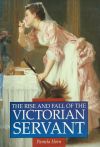
- The Rise and Fall of the Victorian Servant
- by Pamela Horn
- Alan Sutton, 1995; vi + 250pp; £9.99; ISBN 0-7509-0978-1

Reviewed by Barbara Roden
When reading Conan Doyle's works or indeed the works of almost anyone writing in England at the turn of the century-it is amazing to us to note the number of servants who make their often silent, unnoticed way through the pages. There were boys in buttons to show up visitors, housekeepers and cooks to look after the running of the house and kitchen, maidservants to make sure that rooms remained clean and warm and well-lit, lady's maids and valets to look after their masters and mistresses, grooms and stableboys and gardeners to keep the livestock and grounds tidy, coachmen to ferry people about, and of course a butler who would ensure that everything worked smoothly so as not to cause any disturbance to his employers.
Of course, this world has now vanished forever, save for a very fortunate few. As this book points out, however, even in Victorian times the huge establishment with the fleet of servants was the lot of relatively few people. Most families were content with far fewer servants, although it was necessary for a family with any sort of social pretensions to have at least one domestic servant, even if it was only a young maid-of-all-work, or skivvy, taken from the local workhouse. In order to afford such a servant, a family was reckoned, in 1861, to have to have an income of between £150 and £200 a year. An income of £300 would get you a maid-of-all-work and a nursemaid; £500 would provide for a cook, a housemaid, and a nursemaid; for £750 you could have a footboy as well; and for about £1000 a year you could have a cook, an upper-housemaid, a nursemaid, an under-housemaid, and a male servant.
Although most establishments were small ones, with the majority of servants being employed by people who kept fewer than four domestics, the number of people employed as servants was staggering. It is estimated that in 1871, 12.8 per cent of the female population of England and Wales was engaged in domestic service or allied occupations, such as those of washer-woman and charwoman'.
This invaluable and well-researched book describes what life would have been like for the servant classes throughout the Victorian era and up to their decline in the early years of this century. In addition to chapters about the origins of domestic service and the rise of the servant-keeping classes, there are sections dealing with the difficulties in getting and keeping a place; the daily routine of male and female servants; social life 'below stairs'; employer-servant relations; misdoings and misdemeanours; the winds of change (1900 to 1914), and the final phase, the years after World War I.
This book is a useful corrective for anyone whose idea of servants has been formed chiefly by viewing Upstairs, Downstairs, and is an eye-opening read for anyone who wonders what life was really like for all those maids, footmen, grooms, cooks and housekeepers who populate Victorian fiction. For example, Hannah Cullwick, a maid- of-all-work (the most common type of female servant) recorded, in 1860, an account of her day's work:
- Open'd the shutters and lighted the kitchen fire — shook my sooty things in the dusthole & emptied the soot there, swept & dusted the rooms & the hall, laid the cloths & got breakfast up — clean'd 2 pairs of boots — made the beds & emptied the slops, clear'd & wash'd the breakfast things up — clean'd the plate clean'd the knives & got dinner up — clear'd away, clean'd the kitchen up — unpack'd a hamper — took two chickens to Mrs Brewer's and brought the message back — made a tart & pick'd & gutted two ducks & roasted them — clean'd the steps & flags on my knees, blackleaded the scraper in front of the house — clean'd the street flags too on my knees — had tea — clear'd away — wash'd up in the scullery — clean'd the pantry on my knees & scour'd the tables — scrubb'd the flags round the house and clean'd the window sills — got tea at 9 for the master & Mrs Warwick in my dirt but Ann [a fellow-servant] carried it up — clean'd the privy & passage & scullery floor on my knees — wash'd the door & clean'd the sink down — put the supper ready for Ann to take up, for i was too dirty & tired to go up stairs.
These duties — typical for a maid-of-all-work-would have been accomplished between 6:30 am and 11:00 pm, although Mrs Beeton felt that an active girl employed in such duties could also find time in the afternoon or evening to do a little needlework for herself. It is obvious that Mrs Beeton was never in domestic service.
Lavishly illustrated with photographs and contemporary cartoons, and with numerous charts and tables illustrating many of the points made, The Rise and Fall of the Victorian Servant is fascinating reading for anyone interested in the literature — and life — of that period.
- Article courtesy Christopher Roden, founder of The Arthur Conan Doyle Society (1989-2003).

