Review:The Tri-Metallic Question/Catherine Cooke
This review of the book "The Tri-Metallic Question", edited by Peter Horrocks was written by Catherine Cooke and published in the A.C.D. - The Journal of The Arthur Conan Doyle Society (Vol. 2, No. 2) in autumn 1991.
Review


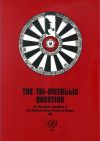
- The Tri-Metallic Question
- The Winchester Expedition of The Sherlock Holmes Society of London 1991
- Edited by Peter Horrocks
- The Sherlock Holmes Society of London, 1991; 83pp; £15 inclusive of U.K. postage only; $30 inclusive of surface postage; no other arrangements apply.

Reviewed by Catherine Cooke
Over the past few years, it has become something of a tradition in The Sherlock Holmes Society of London, that the annual weekend, itself a relatively recent 'tradition', be accompanied by a handbook. That produced by Peter Horrocks for the 1991 expedition to Winchester is perhaps the best to date, certainly as far as physical production is concerned.
This copiously illustrated book is a treasure-trove for anyone looking at the three cases investigated by Holmes in the Winchester area: The Copper Beeches, Silver Blaze and Thor Bridge. (When one recalls that Neil Gibson in the last named story was 'The Gold King', the title of the handbook becomes self-explanatory). Articles examine the Black Swan, one of the few undisguised hostelries in the Canon, Winchester races, the location of Thor Place and Netley, where Watson trained, to mention but a few. In addition, there are a series of 'sidelights' from Elaine Hamill: would Violet Hunter really be flattered, to have her complexion likened to the buff or grey plover's egg, which is heavily marked with black?
During the weekend, the Society visited Sir Arthur and Lady Conan Doyle's grave at Minstead to lay a wreath and view the original grave markers in the belfry of the church. The Handbook contains two articles by Richard Lancelyn Green on Conan Doyle and it is here that the main interest of the publication must lie for members of The Arthur Conan Doyle Society. In the first, Conan Doyle's connections with Hampshire are examined, from his early residency in Southsea, through to his second home at Bignell Wood, not forgetting the various works he set in the county, most notably, perhaps, The White Company. A surprise to some might be Conan Doyle's involvement with the statue of King Alfred which was unveiled in 1901 and still, to this day, dominates the lower end of the Broadway. A few paragraphs examine the manuscript of Thor Bridge, focussing on the changes made as Conan Doyle worked on it. There is also a section on Hampshire's connection with Conan Doyle's spiritualist beliefs, the New Forest being the area which Pheneas spoke of as a safe haven from the 'coming apocalypse'.
The second article, picking up the reference to 'the bi-metallic question' as neatly as the handbook itself does, examines 'The Bi-Interment Question'. The whole story is told, of how Sir Arthur 'passed to fuller life' and was buried in the 'sanctum' at Windlesham, to be joined ten years later by Lady Conan Doyle. Various bits of family correspondence are quoted, showing how the idea of burial at Minstead came to Lady Conan Doyle, how and why this idea was finally put into practise in 1955 after the sale of Windlesham in 1951. It ends with a warning that 'much nonsense' has been written about the translation of the graves, which was done quite openly.
Both articles draw together points which have been examined elsewhere in detail but add much more that is less well-known. While the nature of the handbook as a whole means that these points can often only be touched upon, this in no way detracts from the interest of both articles. Even to a Doylean with little or no interest in the antics of a non-existent detective, The Tri-Metallic Question has much to offer.
- Article courtesy Christopher Roden, founder of The Arthur Conan Doyle Society (1989-2003).

