Review:Western Wanderings/R. Dixon Smith
This review of the book "Western Wanderings", by Sir Arthur Conan Doyle was written by R. Dixon Smith and published in the A.C.D. - The Journal of The Arthur Conan Doyle Society (Vol. 5, 1994).
Review


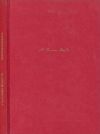
- Western Wanderings
- by Sir Arthur Conan Doyle
- The Arthur Conan Doyle Society; 1994; 79pp; £19.50 (including postage). ISBN 1-899060-00-6

Reviewed by R. Dixon Smith
Many Doylean devotees have on their shelves Arthur Conan Doyle's four volumes of travel writings: The Wanderings of a Spiritualist (1921), an account of the author's missionary tour of Australia and New Zealand from September 1920 through January 1921; Our American Adventure (1923), a chronicle of his third trip to North America from April to June 1922; Our Second American Adventure (1924), a report of the fourth U.S. journey from April to August 1923; and Our African Winter (1929), a narrative of his African crusade from November 1928 to March 1929. Most of those same Doyleans are aware that Conan Doyle also produced an account of his second trip to North America, but few collectors have the elusive Western Wanderings on their shelves, for it never appeared in book form. It was published in The Cornhill Magazine in four instalments between January and April 1915. No American serialisation ensued, but copyright was secured through the publication of four separate pamphlets, under the imprint of George H. Doran. These were used in 1924, in revised form, as Chapter XXV of Conan Doyle's autobiography, Memories and Adventures, under the heading "To the Rocky Mountains in 1914', but then omitted from the new edition in 1930. As a result of its limited magazine circulation, few have even read Conan Doyle's first travel journal. Until now, that is, for The Arthur Conan Doyle Society has brought out Western Wanderings in hard covers.
A far slimmer reckoning than its successors, Western Wanderings fills but the final thirty-six pages of this slender book, while its Introduction by Christopher and Barbara Roden, following the impeccable example of the data-packed Introductions Richard Lancelyn Green has provided for most of the Conan Doyle volumes that have come our way in recent years, occupies the first thirty-one. But what the book may lack in bulk is amply compensated for in the wealth of material both Conan Doyle and the editors Roden give us, the latter furnishing the launching pad, as it were the circumstances under which the 1914 trip to the United States and Canada was made. Fascinating glimpses we find in abundance, for Conan Doyle, in recording his impressions of Canada, was handing down to posterity the rush and tumble of a young, energetic, unspoiled wilderness in the process of being settled.
The wanderings begin in New York: meeting famous detective William J. Burns; visiting the Tombs prison and even-more-famous Sing Sing (Conan Doyle converses with an inmate and is prompted to remark that 'a criminal has some claims upon a man who writes on crime'); the necessity of prison reform as a concession to prisoners' self-respect; attending his first baseball game (when fans yell 'for the purpose of rattling the other side they offend against our conceptions of sport'); and his views on the American press (regularised hours should be observed when a visiting celebrity is in town, and some form of controlling authority should be imposed to keep reporters to the truth).
Conan Doyle had long admired the great historian, Francis Parkman, and it is when the family commences its tour of 'Parkman Land' that the narrative's most exhilarating moments come. Brief snatches of Fort William Henry, Ticonderoga, Iroquois scalping parties, and the French and Indian Wars are full of the zest and high adventure that had fuelled Conan Doyle's imagination since his Edinburgh youth:
If the war of 1776 was, as I hold, a glorious mistake, that of 1812 was a senseless blunder. Had neither occurred, the whole of North America would now be one magnificent undivided country, pursuing its own independent destiny, and yet united in such unblemished ties of blood and memory to the old country that each could lean at all times upon the other.
Thence to the Twin Cities of Fort William and Port Arthur, Conan Doyle's prediction-wrong-headed in this instance that they would become the Canadian Chicago; and a lament that 'Indian, trader, and buffalo have all passed, and here on the great plains are these narrow runways as the last remaining sign of a vanished world.' From Edmonton, Winnipeg, and the French Canadians to Conan Doyle's most cherished landscape:
Shades of Mayne Reid, they are the Rockies-my old familiar Rockies! Have I been here before? What an absurd question, when I lived there for about ten years of my life in all the hours of dreamland. What deeds have I not done among the redskins and trappers and grizzlies within their wilds!
On to Jasper National Park, so large 'it is about half the size of Belgium. ... For a week we lived the life of simplicity and nature.' Descriptions of wildlife, of railway construction and the Ruthenian, Galician, and Croatian labourers who bring it to pass. Montreal, Ottawa, Quebec, and what Conan Doyle foresees as the destiny of this young, virile nation: its union with the United States. Finally a poem, 'The Athabasca Trail', later included in The Guards Came Through and Other Poems (1919).
Bits and pieces, then, painted upon a much smaller canvas than the travel books to come; but while those satisfy us more because of their broader canvas and depth of observation and analysis, Western Wanderings never fails to absorb our interest, however fleeting the impressions may be.
The Arthur Conan Doyle Society published Western Wanderings to commemorate its first North American conference in Toronto on 29 April-1 May 1994. Bound in red cloth with Conan Doyle's autograph stamped in gilt on the cover, the volume is adorned with six rare photographs from the Lancelyn Green collection. It has sold briskly in its limited edition of only one hundred and fifty numbered copies, and is already virtually out of print.
- Article courtesy Christopher Roden, founder of The Arthur Conan Doyle Society (1989-2003).

