Review:Sherlock's Men Masculinity: Conan Doyle, and Cultural History/R. Dixon Smith
This review of the book "Sherlock's Men Masculinity: Conan Doyle, and Cultural History", by Joseph A. Kestner was written by R. Dixon Smith and published in the A.C.D. - The Journal of The Arthur Conan Doyle Society (Vol. 9, june 1999).
This review praises an academic study arguing that the Sherlock Holmes stories are deeply shaped by Victorian, Edwardian, and Georgian anxieties about masculinity, instability, empire, class, and degeneration. The reviewer presents the book as one of the most perceptive works of Doylean criticism, while regretting that its high price may limit its readership.
Review


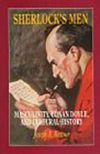
- Sherlock's Men: Masculinity, Conan Doyle, and Cultural History
- by Joseph A. Kestner
- Aldershot and Brookfield USA: Ashgate Publishing, 1997; 250pp. ISBN 1-85928-394-2; £45/U.S.$72.95

Reviewed by R. Dixon Smith
In his preface to The Case-Book of Sherlock Holmes (1927), Arthur Conan Doyle dismissed his greatest creation, Sherlock Holmes, as 'a distraction from the worries of life'. Joseph A. Kestner, Professor of English at the University of Tulsa, disagrees, arguing that 'Holmes served as a masculine model for 40 years and this legacy was transmitted by fathers to sons, not as a "distraction" but as an engagement with 40 years of cultural history'. Kestner re-evaluates the sixty narratives as modes of modelling manliness. seeing in them an attempt to mould male gender behaviour for the late Victorian, Edwardian, and Georgian periods.
The generation that preceded the Great War experienced a profound crisis of confidence that took hold during the period from about 1870 to 1914. Never before had the velocity of change charged ahead as remorselessly as it did during this pivotal period. Swiftly and perceptibly, the rational, ordered, structured society of nineteenth-century positivism gave way to the disorientation and confusion of twentieth-century doubt. Reason itself came to be doubted as certainties waned. Concerns about British social stability; the changing nature of imperialism; the destabilisation of the Empire and the souring of the British colonial experience; the threats posed by the rise of the United States and Germany, international espionage, secret societies, and terrorist organisations; the increasing prevalence of strikes and violence; the emergence of the New Woman and the transformation of woman's place in the legal system (including marriage, divorce, and property rights); the decline of the British aristocracy; the challenge to traditional patriarchy wrought by commercialisation, capitalisation, mechanisation, industrialisation, and urbanisation-all these challenged traditional patriarchal norms, generated anxiety and fear, and led to the destabilisation of masculinity.
The late nineteenth century in Britain 'was a period marked by a crisis of masculinity in society which would necessitate the reinforcement of masculine paradigms'. This identity crisis affected males on all levels-political, economic, social, and psychological-most notably, perhaps, in the battle between the sexes, which stemmed from male resentment of women's emancipation. Feminism and the new status of women in British law threatened male hegemony in the workplace and disrupted the authority of the Victorian patriarch. By the late 1880s, London that great cesspool', as Watson called it was under siege from Fenian bombing outrages, strikes, and the Trafalgar Square riots of November 1887, and had become a city out of control when A Study in Scarlet was published in 1887 and Jack the Ripper struck in 1888. (Kestner is in error when he states: 'In an eerie evocation of A Study in Scarlet, the killer actually wrote on the wall of the room of one of his victims'. The purported Ripper message was not written on Mary Kelly's wall on 9 November, but on an outside wall in Goulston Street on 30 September, following the murder of Catherine Eddowes.) The period was one of massive concern over disorder, instability, unrest, colonial anxiety, and an awareness of the consequences of urbanisation. Out of the yearning for order came the detective as father figure, who sets disordered worlds right. The detective restores order, control, and stability. Sherlock Holmes emerged as the embodiment of law, justice, and capitalist order, displaying qualities of courage, chivalry, fortitude, and patriotic virtue.
Dr Joseph Bell, on whose abilities Conan Doyle based those of his detective, saw Holmes as a dauntless fighter, 'beloved by the boys of this country by the marvellous cleverness of his method'. The founding of the Boy Scout movement in 1907 by Sir Robert Baden-Powell was an attempt to reinvigorate young males in the early twentieth century and to protect and preserve the Empire, by emphasising traditional, manly, moral virtues. Baden-Powell's Scouting for Boys (1908), 'one of the most significant of texts in imprinting manliness on generations of young men in the early twentieth century', endorsed the Holmes tales with great enthusiasm, urging young scouts to emulate the detective's reason, logic, observation, daring, and pluck. A cultural historian,' suggests Kestner, 'must inquire about the circumstances in society which would prompt a writer like Baden-Powell to advise that young men read Sherlock Holmes to learn about manliness.' Assured, reliable, and manly, Holmes sees what others overlook, which explains Baden-Powell's advocacy of Holmes as a heroic paradigm. The dominant cultural myth of masculine supremacy, which made Holmes the object of Watson's hero-worship, and the myth that reason was essentially masculine, were male myths, of course, but ones strongly held in the late nineteenth century. Conan Doyle recognised this function of his work in a letter to his mother in 1899: What I believe is that I have perhaps the strongest influence over young men, especially young athletic sporting men, of any one in England. Conan Doyle 'aligns Holmes with manliness by linking his character to science, practical application, exact knowledge, logic and system, all elements gendered masculine in the nineteenth century.' He constructed a paradigm of manliness that was to have vast repercussions for the next forty years. In Sherlock's Men, Kestner traces the transition of British codes of masculinity during the latter part of the Victorian era, finding in the Holmes stories 'an archive of material about the construction of masculinity during a 40-year period, addressing a wide range of issues concerning the formation of masculinity'.
Holmes emerges as a stabilising influence, a monitor of maleness, and an avenger of abusive masculinity. That members of the male establishment engage in transgressive behaviour raises 'serious doubts about the stability of manliness in the culture'. One of the many ways in which Conan Doyle 'signals his recognition of this "crisis of masculinity" is in the motif of physical wounding.... Doyle stresses the details of John H. Watson's wounding at the disastrous battle of Maiwand in the Second Afghan War... one of the worst defeats the British troops suffered during the century.' Watson's wounded male body is seen as a symbolic castration, 'a symbol of the male fear of loss of control, or more broadly as an emblem of the crisis of masculinity during the period.' Watson's wounding and subsequent return to England as a damaged war veteran is symbolic of conflicted masculinity and the precariousness of the dominant, normative, masculine order of society. Other examples reinforce the motif: Jonathan Small's wooden leg in The Sign of the Four (his very name, Kestner notes, signifies 'diminished'). Commissionaire Peterson, a soldier crippled in the Crimean War, in 'The Blue Carbuncle'; Victor Hatherley, whose loss of a thumb becomes a symbol of castration ('since, injured, he will be unable to pursue his career'). in 'The Engineer's Thumb'; Henry Wood, tortured and crippled during the Indian Mutiny, in 'The Crooked Man'. 'The presence of the wounded male body." Kestner suggests, "indicates a profound cultural conflict about the security of manliness in the society."
The mass of supporting documentation in Sherlock's Men is both staggering and cumulatively compelling. The paradigm of Sherlock Holmes was part of this project to reinvent and reconstitute masculinity for the early twentieth century.' Irene Adler of 'A Scandal in Bohemia' seriously threatens existing male codes. 'The fact that the first of the Holmes short stories should involve a "defeat" for the detective reveals the fissure in the putative stability of Victorian conceptions about maleness. 'The Five Orange Pips' contains one of Conan Doyle's most brilliant metaphors for doubt and anxiety over the forces that threaten the ordered existence of British society: All day the wind had screamed and the rain had beaten against the windows... those great elemental forces which shriek at mankind through the bars of his civilization, like untamed beasts in a cage.' 'The Crooked Man' links the failed masculinity of James Barclay to the nightmare of the colonial experience. 'The Naval Treaty' raises serious questions about the ability of the upper classes to govern the nation. In The Hound of the Baskervilles, fog 'symbolizes the moral miasma in which the criminality exists, but it is strongly suggestive of the Edwardian uncertainty, anxiety and disorientation of the early twentieth century.... The landscape of Dartmoor is likewise a locale of disorientation, uncertainty and ambiguity. The Grimpen mire becomes a symbol of chaos and doubt; one false step and all is lost. The Duke of Holdernesse's behaviour in 'The Priory School' is one of Conan Doyle's 'most blistering accounts of the transgressive behaviour of the aristocracy'. Women's indiscretions motivate 'Charles Augustus Milverton' and 'The Second Stain', but male vengeance against a woman (in 'The Norwood Builder') and the commodification of women (in The Solitary Cyclist') represent an older order's abusive patriarchy. The Great War, the most significant event of the Georgian era, was a masculine event that completed the process of doubt, uncertainty, hysteria, and fear. Owen Dudley Edwards called Holmes's increasing fallibility, in The Oxford Sherlock Holmes, 'Doyle's awareness of increasing loss of British national confidence'. The Valley of Fear is full of anxiety about labour unrest, criminality, terrorist organizations, and secret societies. It becomes, therefore, 'one of Conan Doyle's most powerful exegeses of Georgian anxiety, global disturbance and masculine destabilization'. The stories in His Last Bow, written between 1908 and 1917, reveal an England under siege, its masculine authority confronting both internal and external challenges'. 'Wisteria Lodge' is especially unsettling, for political assassination and intrigue actually infiltrate the English countryside. The horrific medical realism of The Case-Book of Sherlock Holmes (the mutilated face of Eugenia Ronder in 'The Veiled Lodger', the supposed leprosy of Godfrey Emsworth in 'The Blanched Soldier', the destruction of Baron Adelbert Gruner's face in 'The Illustrious Client', and the simian mutation of Professor Presbury in 'The Creeping Man') clearly reflects Conan Doyle's reaction to the horrors of the Great War. Professor Presbury's loss of control in 'The Creeping Man' is a virtual summary of the male cultural anxieties of the Victorian, Edwardian and Georgian periods: sexual inadequacy, atavistic reversion, race degeneration and domestic aberrance'. In 'The Sussex Vampire', Jack, the scion of an upstanding British male, is both deformed and vicious, living proof of race degeneration. And in 'Shoscombe Old Place', the last Sherlock Holmes story, 'very significantly it concerns the deterioration of masculinity. in England' in its portrayal of Sir Robert Norberton. 'That the subject of the story is race degeneration is emphasized when Holmes and Watson visit the crypt' containing the relics of a once-honourable family, ironically underscoring the decline of British masculinity.
The fact that Holmes does not always succeed reveals the conflicted nature of masculinity itself. The Sherlock Holmes texts often present unresolved conflicts. This indeterminacy, as the series progressed from 1887 to 1927, became increasingly pessimistic. While the detective story is presumed to end with closure and finality, in Conan Doyle's Holmes texts the reader is instead disoriented and destabilized at the conclusions.' Especially astute is Kestner's observation that by having Holmes vanish for half of The Hound of the Baskervilles and The Valley of Fear, Conan Doyle increased his readers' sense of disorientation and uncertainty about the future. The gender modelling of this period was an essentially conservative attempt to turn the clock back, but its chances of success dimmed as the Victorian era gave way to the Edwardian and the Georgian.
If Kestner's perceptions are correct, then Conan Doyle clearly failed to recognise the brilliance of the body of work he often seemed to have wished he had never created. Far from distracting his readers from life's worries, he pummelled them with them. Sherlock's Men is literary criticism of the highest water, one of the most perceptive and significant Doylean critical works that has appeared to date. Unfortunately, it is stiffly overpriced, thereby ensuring that its exposure to some Doyleans and most Sherlockians will be more limited than it needs to be.
R. Dixon Smith
- Article courtesy Christopher Roden, founder of The Arthur Conan Doyle Society (1989-2003).

